
VISA PHOTO PREPARATION
U.S. visa photos with a head covering, hair or hearing aid
A religious head covering worn daily can be permitted in a U.S. visa photo, but your full face must remain visible and the covering must not cast shadows on it. The exception does not make an obscured face acceptable.
Start with the reason for the covering
The State Department's general visa-photo rule excludes hats and head coverings that obscure the hair or hairline, with an exception for religious coverings worn daily. Check that specific exception before treating a fashion hat, cap and religious covering as interchangeable.
Keep normal identifying features visible. Arrange the covering before taking the photograph rather than removing fabric digitally afterward. An edit that reconstructs a hidden part of the face changes what the camera actually recorded.
Use a face-and-shadow check
- Face the camera directly and keep the full face in view.
- Look for fabric crossing the cheek, chin or other facial features.
- Inspect shadows cast by the edge of the covering onto the face.
- Adjust the covering or lighting and take a fresh photograph when needed.
- Review the whole result again, including crop and expression.
A plain background cannot compensate for a shadow across an eye or an obscured chin. Inspect the actual face, not just the color behind it. Keep an untouched original so you can distinguish a new capture from a retouched copy.
Does hair have to show both ears?
The cited U.S. visa rules focus on a visible full face and compliant composition. Do not import an ear-visibility requirement from a different country's photo instructions. Equally, do not use that distinction to hide facial features behind hair.
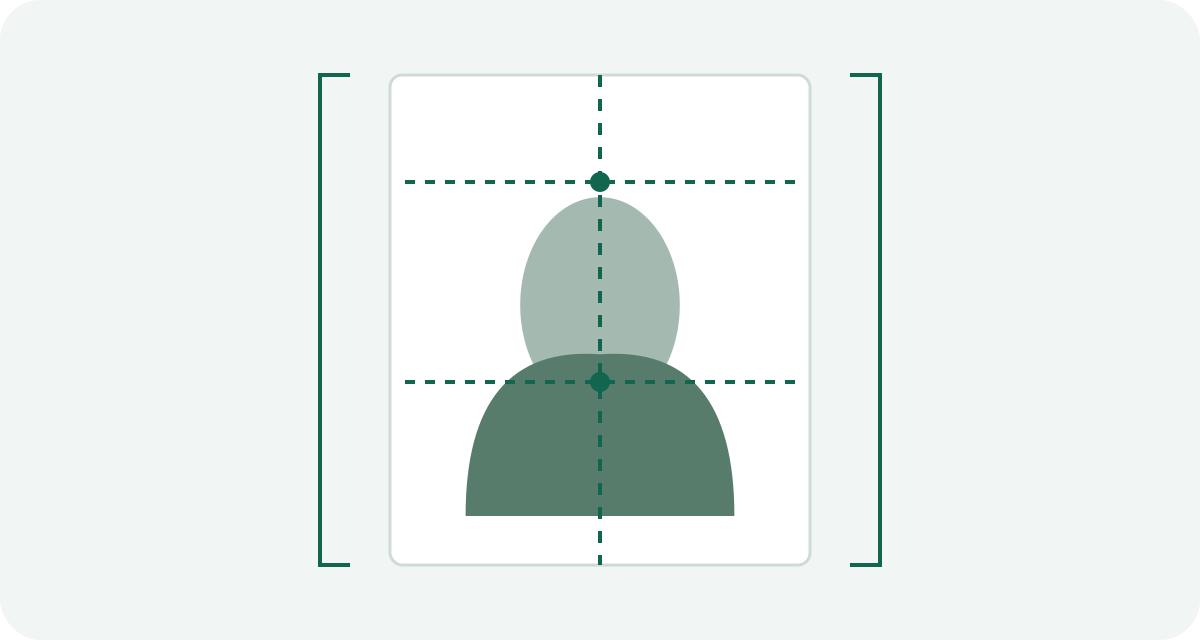
For the U.S. digital head-size measurement, the composition template includes the hair at the top of the head. Moving the measurement to the scalp because the hairstyle is tall changes the calculation. If positioning is difficult, retake with enough space in the original frame instead of digitally shortening the hair.
Headphones and hearing devices are different cases
The general guidance prohibits headphones, wireless hands-free devices and similar items in the photograph. It separately allows a hearing device normally worn by the applicant. Do not infer that every electronic object near the ear is treated the same way.
Glasses have their own rule and limited medical exception. Removing headphones does not answer a glasses question; use the dedicated glasses guide for that decision.
Prepare a question the receiving post can answer
If your situation does not fit the published wording, identify the item and the reason it is worn when consulting the receiving embassy or consulate. Ask about your actual application route, rather than sending a generic “is headwear allowed?” question.
This guide explains the published visa-photo categories. It does not establish a new exemption, require a document not stated by the relevant instructions or guarantee acceptance of a particular photo.
Official sources and preparation notes
- U.S. Department of State: visa photo requirements
- U.S. Department of State: photo composition template
Sources checked October 3, 2026. Prepared by Visa Photo Prep with AI assistance for research and drafting. Calculations and checklists are preparation aids; the receiving authority decides whether a photograph is acceptable. Check the current instructions for your application before submission.
Use the current instructions for your application route; the receiving authority decides whether a photograph is acceptable.
How we distinguish official rules from tool settings · Report a correction